The Short Answer
A registered agent handles legal and government documents for your LLC or corporation—lawsuits, tax notices, and state compliance filings. It’s required by law in all 50 states. A virtual mailing address handles everything else—client mail, bills, packages, checks, and general business correspondence. Most businesses need both.
Key takeaways
- Every LLC and corporation must have a registered agent in the state where it’s formed. This is not optional.
- A registered agent only receives government and legal documents (service of process, IRS notices, annual report reminders, state filings).
- A virtual mailing address receives and manages all your business mail—client correspondence, invoices, packages, checks, and more.
- Your registered agent’s name and address become part of the public record, which is why many business owners use a professional service instead of their home address.
- A virtual mailing address and a registered agent can share the same physical location, letting you manage everything from one place.
What is a registered agent?
A registered agent is the person or company officially designated to receive legal and government documents on behalf of your business. Every LLC and corporation in the U.S. is required to have one—all 50 states mandate it.
When you file your formation documents (Articles of Organization for an LLC, Articles of Incorporation for a corporation), you must name a registered agent and provide their physical street address. P.O. boxes are not accepted. The agent must be located in the state where your business is registered, and if you operate in multiple states, you need an agent in each one.
Different states use different names for this role—“registered agent,” “resident agent,” “statutory agent,” or “agent for service of process”—but the function is the same everywhere.
What does a registered agent handle?
The scope is narrow and specific:
- Service of process—if your business is sued, the lawsuit is delivered to your registered agent.
- Tax notices from the IRS and state agencies.
- Annual report reminders from the Secretary of State.
- Compliance filings and official state correspondence.
Many of these documents come with deadlines. A missed notice can lead to penalties, default judgments, or your LLC being administratively dissolved. Your registered agent needs to be available at their listed address during normal business hours to accept these documents—that’s a legal requirement, not a suggestion.
Can you be your own registered agent?
Yes, but it comes with trade-offs. You must live in the state where your business is registered and be physically available at the listed address during business hours. Your name and address also go on public record, which means anyone—including data brokers, junk mailers, and disgruntled customers—can find it.
Professional registered agent services typically run between $100 and $300 per year and keep your personal information off public records while tracking compliance deadlines on your behalf.
What is a virtual mailing address?
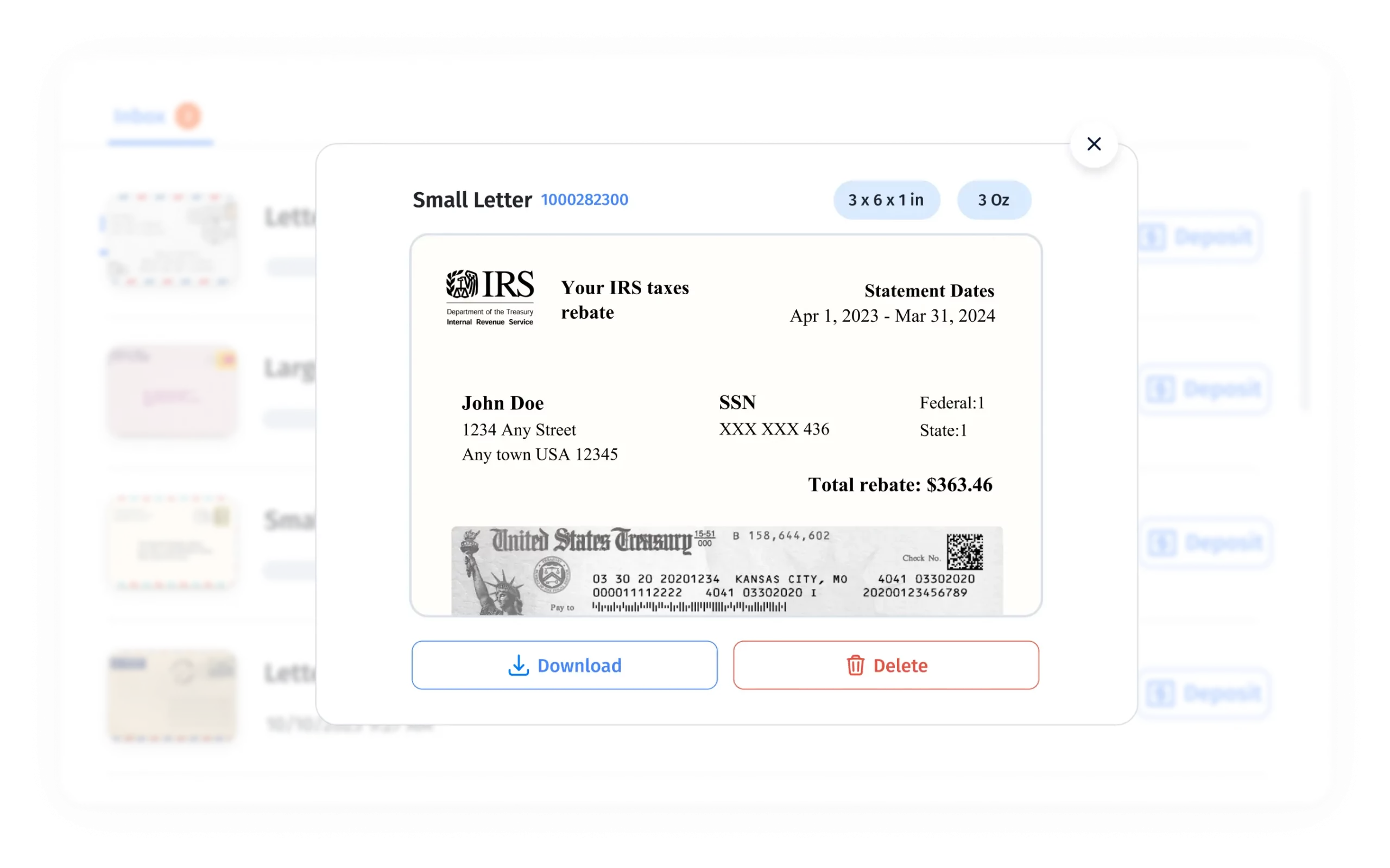
A virtual mailing address is a real street address where your business mail is received and managed by a professional team. When mail arrives, it’s scanned and uploaded to an online dashboard. From there, you decide what happens—open and scan, forward, store, deposit checks, or shred.
Unlike a registered agent, a virtual mailing address isn’t limited to government documents. It handles your full range of business mail: client letters, invoices, packages, checks, and everything else that shows up.
For LLC owners specifically, a virtual mailing address solves an important problem: LLC registration information is public record. If you used your home address when you formed your business, it’s searchable online. A virtual mailing address gives you a professional business address without exposing where you live.
Registered agent vs. virtual mailing address: side by side
| Registered agent | Virtual mailing address | |
|---|---|---|
| Purpose | Receive legal and government documents | Receive and manage all business mail |
| Required for LLCs? | Yes—required in every state | No—but highly recommended |
| What it handles | Lawsuits, tax notices, state filings | Client mail, packages, checks, invoices, and more |
| Privacy benefit | Keeps your name off public record (if using a service) | Keeps your home address off business listings |
| Address type | Must be a physical street address in the state of formation | Real street address, accessible from anywhere online |
The most important thing to understand: these two services don’t compete with each other. They cover different categories of mail. A registered agent handles the legal and compliance side. A virtual mailing address handles everything else.
Do you need both?
If you’re forming an LLC or corporation, a registered agent is legally required. That’s settled.
The question is whether you also need a virtual mailing address. For most businesses, the answer is yes—because a registered agent only covers a small fraction of the mail your business actually receives. Client correspondence, bills, packages, and checks all need somewhere to go, and managing them efficiently matters more than most people expect when they’re getting started.
The good news is that many providers now offer both services under one roof. You can use the same address for your registered agent and your business mailing address, which means one place to manage legal documents, everyday mail, and packages—all accessible from a single dashboard.
If you’re still figuring out the right setup for your business, contact us here. We’re happy to walk you through how it works, answer your questions, and show you a free demo of how a virtual mailbox can simplify your mail management from day one.