Key Takeaways
- SOC 2 is an independent CPA audit of how a provider handles your data, reported as an attestation.
- Type II is the stronger assurance because it proves controls worked over at least six months.
- A SOC 2 report is necessary, but not the whole picture on its own.
- Pair it with bank-grade encryption, a HIPAA-ready process with a BAA, in-house handling, and role-based access.
- Always ask to see the current Type II report before trusting a provider with sensitive mail.
Your business mail carries tax notices, legal letters, checks, and customer PII. The real question is who touches that mail and how. A SOC2 virtual mail service answers it with an independent audit instead of a promise.
Over the past few years, SOC 2 has become the shorthand businesses use to judge whether a virtual mailbox can be trusted with sensitive documents. This guide explains what SOC 2 means and how to verify a provider’s claim before you hand over your mail.
What Is a SOC2 Virtual Mail Service?
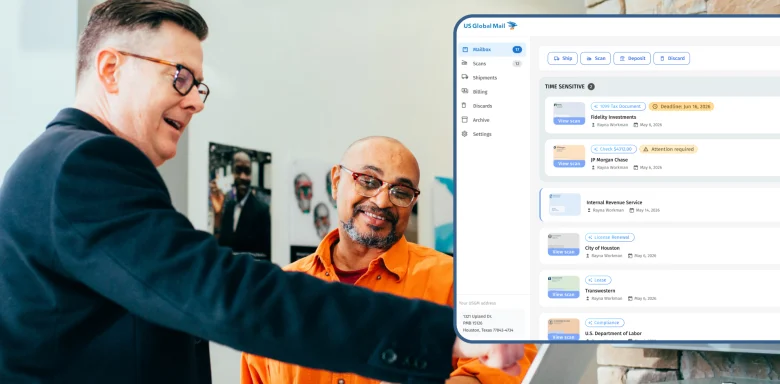
A SOC2 virtual mail service is a virtual mailbox or digital mailroom that has passed an independent audit against the AICPA’s SOC 2 standard. A virtual mailbox receives your physical mail and scans it into an online inbox you can read from anywhere. The SOC 2 audit checks whether the provider protects that data properly.
The AICPA created the standard. It describes its AICPA’s SOC framework as “a suite of service offerings CPAs may provide in connection with system-level controls of a service organization.” In plain terms, an outside CPA firm examines how a service company handles the data it holds for customers.
That framing matters for mail. Once a letter is opened and scanned, it becomes data on a server.
A compliant digital mailroom treats every scanned page as sensitive information. So the security question here is the same one you would ask any software vendor.
For a business, the stakes are concrete. A single scanned tax notice can expose an EIN, a mailing address, a phone number, and a filing deadline in one image.
Multiply that across every entity you run, and your mailbox becomes a map of your finances. That is why the audit behind the service matters as much as the features on the pricing page.
What SOC 2 Actually Measures: The Five Trust Services Criteria
SOC 2 is an attestation rather than a certification. An outside CPA firm reviews a company’s controls and issues a report on what it found. There is no pass/fail badge or government seal behind it, which is why the report itself matters more than the label.
SOC 2 examines a service organization’s “controls over security, availability, processing integrity, confidentiality, and privacy,” known as the five Trust Services Criteria. Security is mandatory in every SOC 2 report. The other four are added based on the service being reviewed.
Here is what each criterion means when the service is handling your mail:
- Security: Keeps your scanned mail and account safe from unauthorized access through encryption and login controls.
- Availability: Keeps the service running, so you can reach your mail when a deadline is close.
- Processing integrity: Makes sure mail is scanned and routed correctly and completely, with nothing dropped.
- Confidentiality: Limits who can view a scanned document, which matters when a CPA or attorney needs access.
- Privacy: Governs how personal information in your mail is collected and later retained or deleted.
Read together, these criteria describe a provider that protects your mail, keeps it available, and controls who sees it. That is a higher bar than a single security promise on a homepage.
SOC 2 Type I vs. Type II: Why the Difference Matters
Not every SOC 2 report carries the same weight. The CPA firm KirkpatrickPrice explains the difference between Type I vs Type II plainly. A Type I report attests to controls “at a service organization at a specific point in time.” A Type II report attests to those controls “over a minimum six-month period.”
The gap is design versus proof. Type I confirms that good controls exist on the day of the audit. Type II confirms that those controls actually worked, day after day, for at least six months.
For a mail service you rely on every day, Type II is the stronger assurance. It shows the safeguards held up over time, not just during a single snapshot. The table below sums up the difference.
| SOC 2 Type I | SOC 2 Type II | |
| What it tests | Control design | Control design and operating effectiveness |
| Time frame | A single point in time | A minimum six-month period |
| Assurance level | Controls exist on paper | Controls worked in practice over time |
Why SOC 2 Matters for a Virtual Mailbox
Your mail holds the exact data that fuels fraud: account numbers, signatures, tax IDs, and health records. When a provider handles that data, its security becomes your security. A weak link in their process is a weak link in yours.
The cost of getting this wrong keeps climbing. IBM’s 2026 report puts the global average data breach cost at “$4.99M.” It calls that figure “a 12% increase over last year and a record high.”
Vendors are a growing part of that risk. The Verizon 2025 DBIR found third-party breach involvement “in 30% of all breaches we analyzed, up from roughly 15% last year.” Your mail provider is one of those third parties, with direct access to your documents.
Regulators expect you to check that access. The FTC data security guidance names four key elements of an effective data security plan. One of them is “the security practices of contractors and service providers,” which is exactly what your mail handler is.
Put together, these numbers make the case plainly. Breaches are expensive, and vendors are increasingly the way in. The government also expects you to vet the service providers you rely on.
Beyond the SOC 2 Badge: What Else Secure Mail Handling Requires
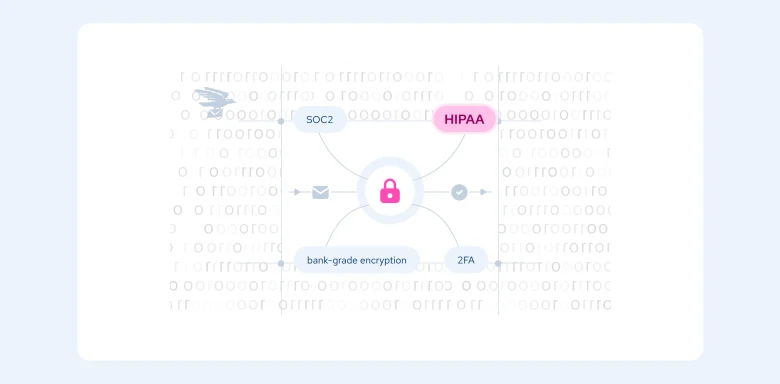
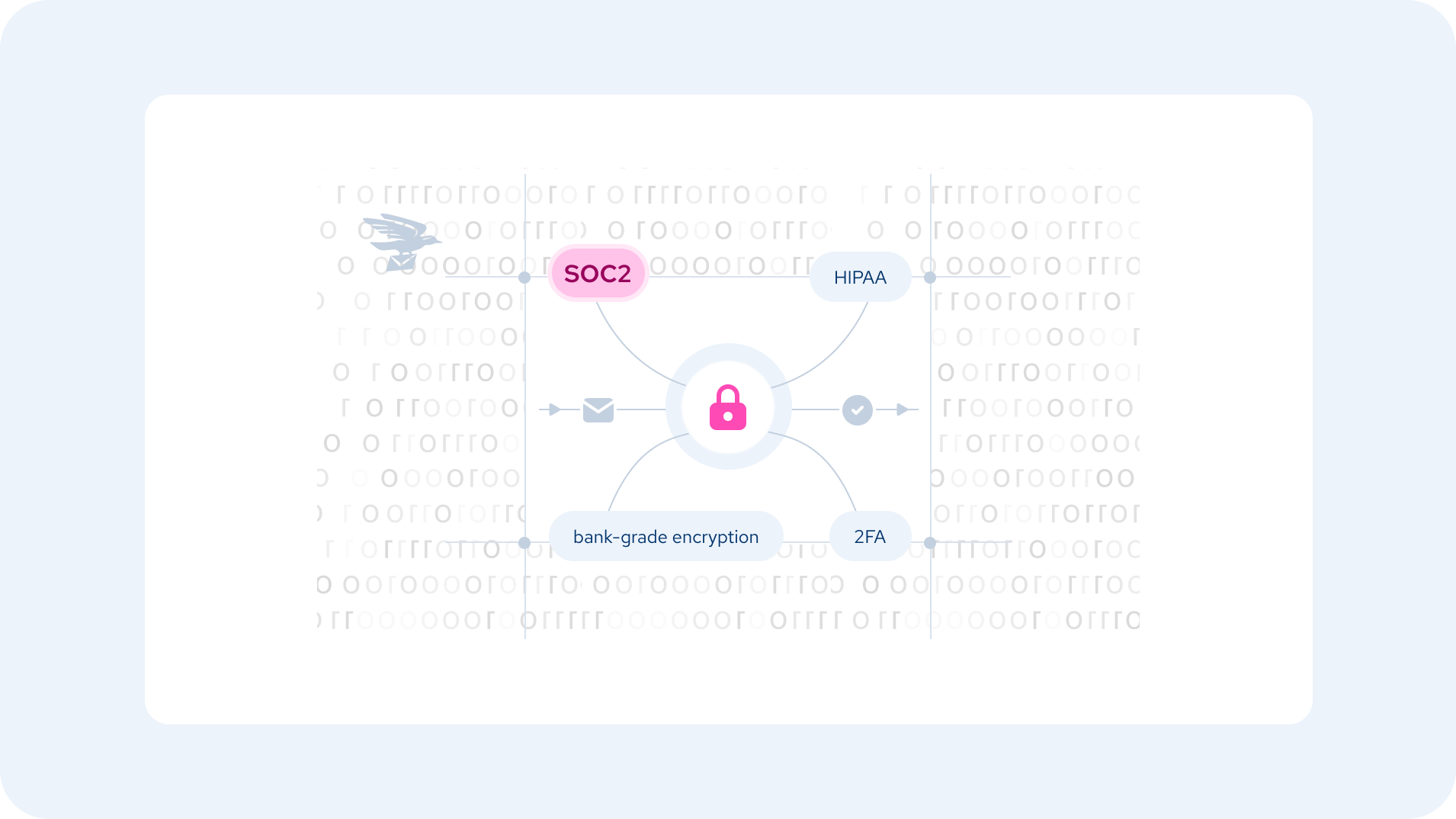
SOC 2 is necessary, and it is still only part of the picture. A report tells you a firm was audited, so you also want to know which specific safeguards protect your mail every day. A secure virtual mailbox should give clear answers on each point below.
- Bank-grade encryption that protects your scanned mail in storage and in transit.
- Two-factor authentication that blocks access even if a password leaks.
- Role-based permissions and audit logging, so you control who sees which documents.
- HIPAA compliance with a signed BAA for regulated health data.
- In-house mail handling by vetted employees instead of an outsourced crew.
That last point is easy to miss. US Global Mail reports more than 100,000 customers since 1999, and it processes mail with vetted employees in company-owned operations. By the company’s own account, high-quality color scans arrive in about 2 to 4 hours.
Handling in-house shrinks the number of outside parties that ever touch your mail. Enterprises can add entity-specific mail streams and per-user permissions on top through an AI-powered business mailroom.
It also helps to ask where the audit stops. A strong provider applies the same controls to scanning, storage, forwarding, and access. That way your mail stays protected at every step, not just at the front door.
How to Verify a Provider’s SOC 2 Claim
A logo on a homepage is a marketing claim until you see the report. Treat the claim as a starting point, then confirm it. Use this checklist when choosing a virtual mailbox for sensitive mail:
- Ask for the SOC 2 Type II report, which providers usually share under an NDA.
- Confirm the audit period and which Trust Services Criteria the report covers.
- Check that the report is current, meaning it was issued within the last 12 months.
- Ask whether employees process mail in-house or an outside vendor handles it.
- If you handle PHI, confirm HIPAA compliance and that a BAA is available.
These questions turn a vague “we’re secure” into evidence you can act on. A provider that shares the report quickly is usually a provider that has one worth reading. If a sales team stalls or points only to a logo, treat that as an answer in itself.
Keep the report alongside your other vendor records, and set a reminder to ask for the next one when the audit period ends. For teams comparing options at scale, our guide to a secure and compliant mailbox applies the same criteria across multiple offices and entities.
Frequently Asked Questions
Everything you need to know about a virtual address and virtual mailbox.
Is a virtual mailbox safe?
A virtual mailbox is safe when the provider backs its security with an independent audit and clear controls. Our guide on whether are virtual mailboxes safe walks through the safeguards to check first.
Is SOC 2 the same as HIPAA?
They are different. SOC 2 is a broad attestation about a company’s data controls, while HIPAA is a US law that governs protected health information.
Is SOC 2 a certification?
SOC 2 results in an attestation report issued by an independent CPA firm. Certification is a common shorthand, though attestation is the accurate term.
How often is SOC 2 renewed?
SOC 2 reports do not expire by rule. Enterprise buyers usually expect a fresh report about every 12 months.
Got more questions?