Key Takeaways
- Paper PHI counts under HIPAA, so lab results and billing letters are regulated the moment they arrive.
- A virtual mailbox is compliant only when the provider signs a BAA and proves its safeguards.
- Check the facilities, encryption, access controls, and shredding before you trust a provider with PHI.
- The stakes are high, with the average healthcare breach costing millions and hundreds reported each year.
What A HIPAA Compliant Virtual Mailbox Actually Is
A HIPAA compliant virtual mailbox is a service that receives and scans your physical mail so you can manage it online. It handles mail that may contain Protected Health Information (PHI) while meeting HIPAA’s privacy and security rules. A signed Business Associate Agreement (BAA) backs those protections in writing.
People also call this a HIPAA compliance virtual mail service. A virtual mailbox gives you a real street address where a provider receives your mail on your behalf.
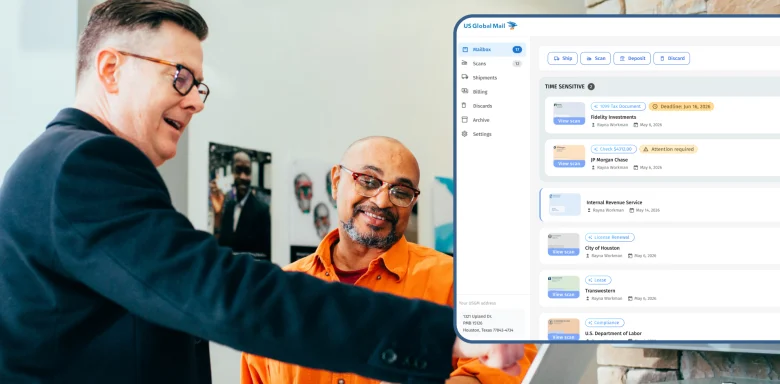
The provider then scans each item so you can read it online from anywhere. Healthcare teams use it to get a real U.S. address without a physical office.
PHI is the health data HIPAA protects. If you want the federal definition of what PHI actually means, the government puts it plainly: “PHI stands for Protected Health Information. The HIPAA Privacy Rule provides federal protections for personal health information held by covered entities…”
Here is the part many guides skip. A virtual mailbox is not automatically HIPAA compliant just because it scans mail. Compliance depends on the provider’s safeguards and its willingness to sign a BAA, so the format matters far less than the company behind it.
Why HIPAA Applies To Your Physical Mail
People often think HIPAA is only about email and software. It also covers PHI printed on paper and delivered by the mail carrier. The government is direct on this point, and the HIPAA Privacy Rule standards state that “The Privacy Rule protects all ‘individually identifiable health information’ held or transmitted by a covered entity or its business associate, in any form or media, whether electronic, paper, or oral.”
Plenty of PHI still shows up in the mailbox. Think of lab results, insurance explanation-of-benefits (EOB) statements, patient billing letters, and referral notices. Every one of those envelopes is regulated the moment it lands.
Two terms decide who is responsible. A covered entity is the provider or health plan that creates or holds PHI, such as a clinic or a therapist.
A business associate is any company that handles PHI on that provider’s behalf. A mail service becomes one the moment it opens and scans your health mail.
This is not abstract law for most readers. Picture a clinic that closed its front office and works remotely, or a solo therapist who never had a front desk. Their PHI still arrives on paper, and someone has to receive it in a compliant way.
What Happens When PHI Mail Is Mishandled
The stakes are real. The HHS Office for Civil Rights can issue civil penalties when PHI is exposed. The financial damage from a breach usually dwarfs the fine itself.
The numbers show why. IBM, via TechTarget, reports the cost of a breach: “The average cost of a healthcare data breach fell by 10.6% in 2024, resting at $9.77 million” and healthcare “retained its status as the costliest industry for data breaches for the 14th year in a row.”
Large incidents are common, too. According to HIPAA Journal, the reported healthcare data breaches keep piling up: “As of January 28, 2025, the OCR data breach portal shows 725 data breaches of 500 or more records in 2024, the third consecutive year that more than 700 large data breaches have been reported to OCR.”
Now bring it back to something ordinary. A single patient letter left in an unlocked lobby is the same kind of exposure behind those figures.
So is one dropped in a shared recycling bin. Compliant mail handling keeps a routine envelope from becoming a reportable event.
The 5 Things That Make A Virtual Mailbox HIPAA Compliant
Not every provider clears the bar. A compliant virtual mailbox has to prove its safeguards in a contract. It also controls who touches your mail from arrival to your screen.
Use the five items below as a scorecard. If a provider cannot check all five, treat it as a consumer mailbox rather than a HIPAA compliant one.
A Signed Business Associate Agreement (BAA)
A BAA is the written contract that legally binds a provider to protect your PHI. It is the first test, and it is non-negotiable.
HHS requires this agreement between a covered entity and its business associates. Many consumer mailbox services will refuse to sign one, and if a provider says no, the conversation is over.
Encryption And Access Controls
Strong encryption and tight access controls keep digital copies of your PHI private. The HIPAA Security Rule requires covered entities and business associates to “Ensure the confidentiality, integrity, and availability of all electronic protected health information…”
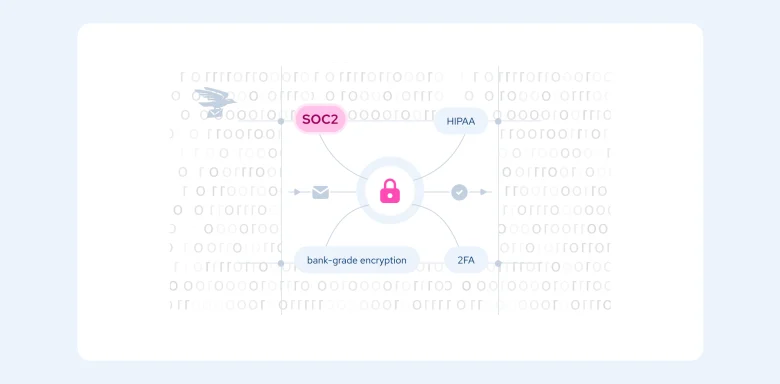
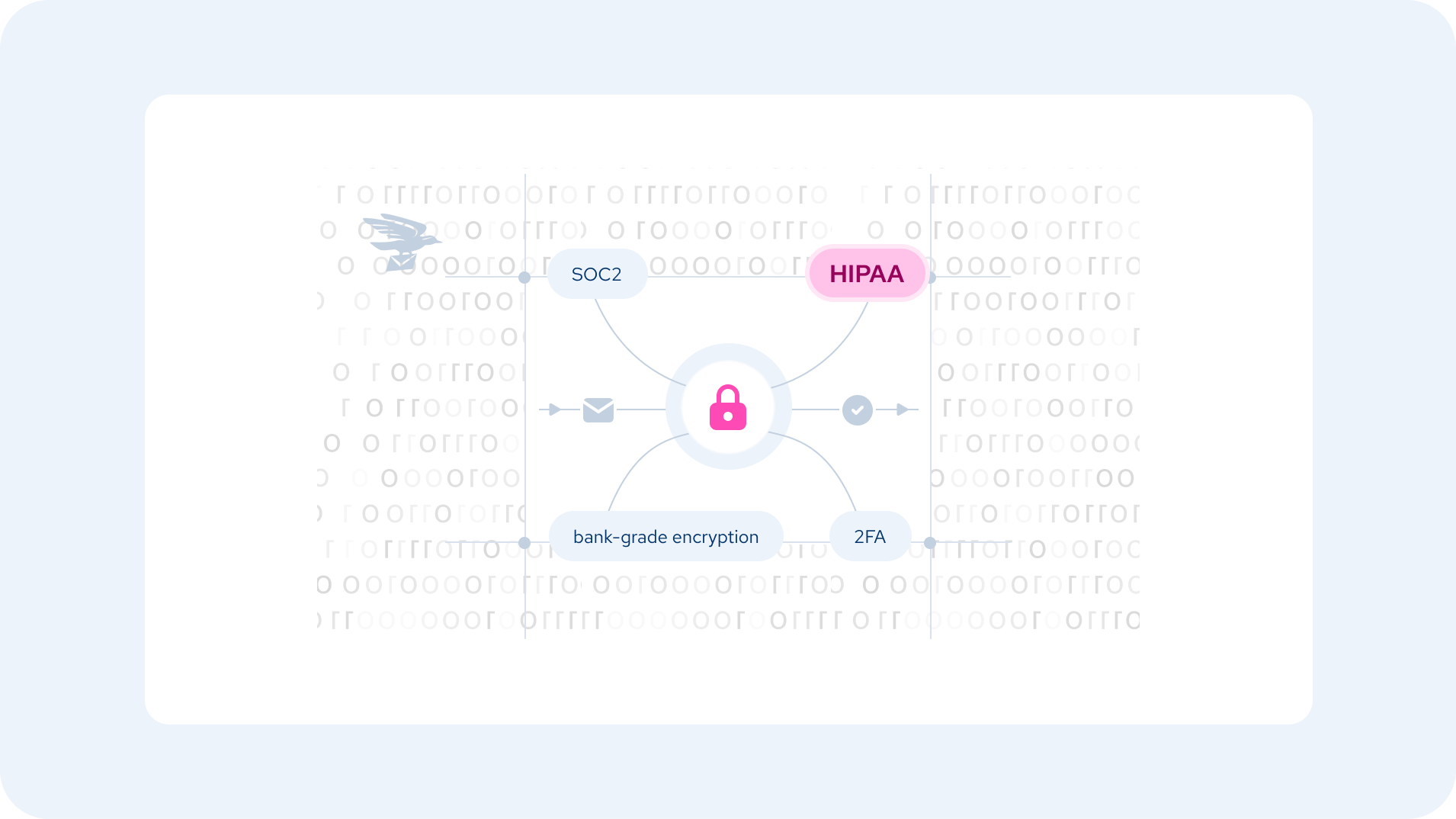
In practice, look for bank-grade encryption and safeguards, plus two-factor authentication (2FA) and role-based permissions. A SOC 2 Type II audit verifies those controls actually work.
Secure Facilities And A Clear Chain Of Custody
Who physically handles your mail matters as much as any software setting. Ask where the mail is opened and who opens it.
US Global Mail runs company-owned operations, so mail is processed by vetted employees rather than outsourced or franchise locations. Audit logging records each step, which is a big part of how your mail stays protected from the moment it arrives.
Secure Digital Scanning
Fast, secure scanning turns paper PHI into a private, searchable record. A compliant provider will digitize incoming documents securely and post them to your online mailbox. US Global Mail says it scans the same day and delivers color scans in 2–4 hours, so PHI spends less time sitting as loose paper.
Certified Shredding And Destruction
Unwanted PHI has to be destroyed on a documented schedule. Once you no longer need a document, it should be shredded, not thrown away. Certified destruction with a record of what was shredded closes the loop and keeps discarded PHI out of the wrong hands.
How To Choose A HIPAA Compliant Virtual Mailbox Provider
Vetting a provider takes about five direct questions. Ask each one before you sign, and get the answers in writing.
- Ask the provider to sign a BAA in writing before any PHI arrives.
- Ask for the current SOC 2 Type II report so you can verify the controls independently.
- Ask who opens and scans your PHI, whether vetted employees or an outsourced location.
- Ask about certified shredding, with documentation for anything you choose to discard.
- Ask about access controls such as 2FA, role-based permissions, audit logging, and revocable access.
One extra detail matters for billing teams. US Global Mail includes free check deposit on every plan, which helps medical billing operations that still receive paper payments. For larger groups, an enterprise mailroom for regulated teams adds entity-specific mail streams and BAA or DPA execution before onboarding.
Setting Up Your Compliant Virtual Mailbox
Getting started is quicker than most people expect. The steps are the same whether you are a solo therapist or a multi-entity health group.
First, pick a plan that matches your mail volume. Next, complete the required authorization form, the notarized USPS Form 1583 that lets the provider receive mail for you.
Then sign the BAA so PHI is covered from day one. Finally, set your rules for what to scan, forward, deposit, or shred, and your compliant mailbox runs on autopilot.
Frequently Asked Questions
Everything you need to know about a virtual address and virtual mailbox.
Are virtual mailboxes HIPAA compliant?
Some are and some are not, because compliance depends on the provider’s safeguards and its willingness to sign a BAA. A basic consumer mailbox that will not sign a BAA should not receive your PHI
Is a virtual mailbox automatically HIPAA compliant if it scans mail?
No, scanning alone does not make a mailbox compliant. You also need a signed BAA, encryption, access controls, secure facilities, and certified shredding.
What is a BAA and do I need one?
A Business Associate Agreement is the written contract that legally requires a mail provider to protect your PHI. If your mail contains PHI, you need one before that mail arrives.
Is US Global Mail HIPAA compliant?
Yes, US Global Mail is SOC 2 Type II audited and HIPAA compliant, with bank-grade encryption and 2FA, plus a BAA available for regulated industries. US Global Mail says it has served more than 100,000 customers since 1999, with mail processed by vetted employees.
Got more questions?